
Almost everyone against Infantino, but not Qatar: “FIFA Forward
According to Tuttomercatoweb.
Why this matters
The controversy surrounding Gianni Infantino and the 'FIFA Forward Enterprise' proposal reflects deep tensions in international football, especially as the 2026 World Cup approaches. Resistance from several federations indicates widespread concern about preserving control and independence of football's governing organizations. Qatar, by supporting the proposal, stands out as a strategic ally of FIFA, which can influence future decisions and partnerships in the context of the tournament.
Main conclusions
- Almost everyone against Infantino, but not Qatar: “FIFA Forward.
- Infantino retreated from the plan to sell World Cup quotas, but the controversy did not subside; Qatar stood out for not opposing and seeing qualities in the “FIFA Forward Enterprise” concept.
- Almost all against Infantino, not in Qatar: "Fifa Forward Enterprise aveva punti di forza".
Gianni Infantino is once again at the center of controversy. The FIFA president was the target of a broad movement of dissent, even after abandoning the project that considered the sale of shares in the World Cup and other competitions under the authority of the organization. The proposal, known in the internal debate as “FIFA Forward Enterprise”, provoked significant resistance within international football, but found no opposition in Qatar, a country that, according to readings of the process, saw some strong points in the corporate design.
Infantino's retreat was not enough to cool the protest. The idea of going public with part of the rights and revenues associated with the biggest competitions on the FIFA calendar generated concern among federations and actors in the ecosystem, especially regarding the preservation of strategic control, the independence of governance and the safeguarding of the global and non-profit nature that the governing structures say they want to maintain.
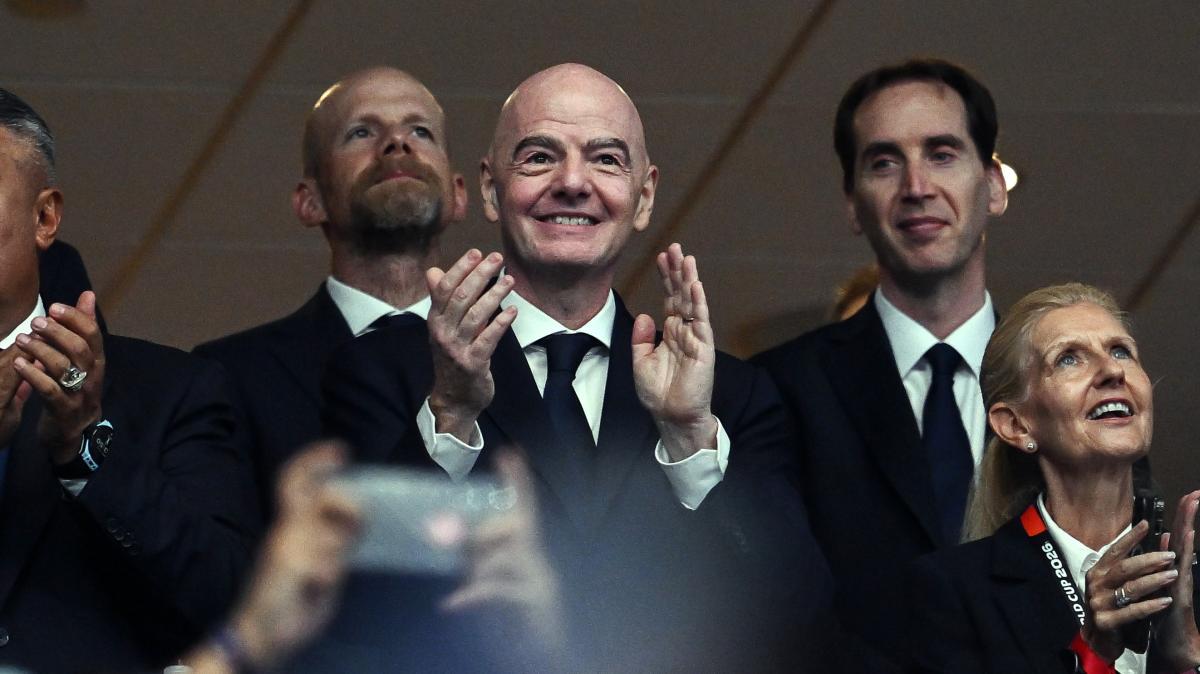
Although the initiative has already been put aside, the discussion exposed old tensions: how to finance the expansion and modernization of football without ceding decision-making influence to external entities? For critics, the risk of privatizing a portion of national team football's most valuable assets could set a delicate precedent; for those who saw merits in the model, there was potential to accelerate investment, reinforce operational efficiency and guarantee financial predictability in the medium term.
This debate arises in a cycle in which the 2026 World Cup, in the United States, Mexico and Canada, is asserting itself as FIFA's main commercial asset. The tournament, extended to 48 teams and with 104 games, will concentrate record revenues from ticketing, broadcasting rights and sponsorships. Any change in financial architecture would have a direct impact on the distribution of funds and global development programs, pillars that FIFA insists on protecting.
For now, the “FIFA Forward Enterprise” initiative remains in the drawer. It remains to be seen whether this episode definitively closes the possibility of corporate structures to manage part of the rights to the World Cup and other events, or whether it will return in another form, with greater consensus and robust governance safeguards. What is certain is that the challenge to Infantino left marks and reinforced political sensitivity around any attempt to reconfigure the ownership and management of the most valuable competitive assets in world football. Qatar, due to the exception it represented in the general tone of the debate, will be associated with a more favorable reading of the concept, highlighting that, despite the differences, the discussion on financing and management models for global football is far from over.
What happens next
With Infantino's proposal now ruled out, the focus can turn to how FIFA will finance the expansion and modernization of football without compromising its governance. The discussion about the privatization of rights and revenues will continue to be a hot topic, especially with the 2026 World Cup on the horizon. FIFA and Infantino will have to find a balance between investment and control, while dealing with pressure from federations and clubs who advocate the preservation of football's values.
Frequently asked questions
Who is Gianni Infantino?
Gianni Infantino is the president of FIFA, responsible for managing football competitions
international level.
What is FIFA Forward Enterprise?
FIFA Forward Enterprise was a proposal to sell shares in the World Cup and other competitions, which generated controversy among football federations.
What is the relationship between Qatar and FIFA Forward Enterprise?
Qatar did not oppose the FIFA Forward Enterprise and saw strengths in the proposal, unlike many other federations.
What are the concerns about privatization in football?
Concerns include preserving strategic control and the independence of football governance, as well as the global and non-profit nature of governing structures.
When and where will the 2026 World Cup take place?
The 2026 World Cup will be held in the United States, Mexico and Canada.