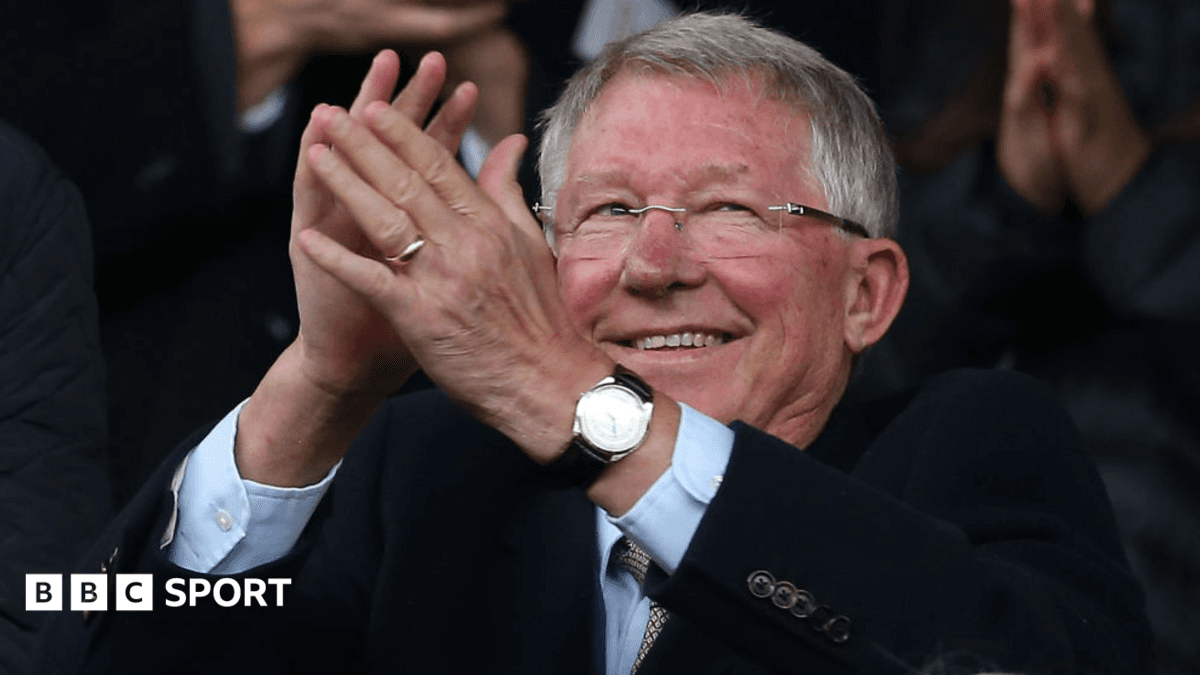
Sir Alex Ferguson talks about brain haemorrhage and injuries
According to Bbc.
Context
Sir Alex Ferguson, one of the greatest coaches in football history, had a remarkable career at Manchester United, where he won 38 trophies. His influence on the club and on English football is undeniable, and his recovery after his brain haemorrhage is an example of strength and determination. His story resonates not only with United fans, but also with all football lovers.
Why this matters
Sir Alex Ferguson's experience following his brain haemorrhage is a testament to the resilience and passion he has for football. His emotional connection with Manchester United and the fans demonstrates the coach's importance in the club's history and global football. His career, marked by Premier League success, continues to inspire players like Scott McTominay and legends like Paul Ince and Ryan Giggs.
Main conclusions
- Sir Alex Ferguson talks about cerebral hemorrhage and the.
- Sir Alex Ferguson reflects on his return to Manchester United after a brain haemorrhage, discussing his career, challenges and the importance of youth in football.
- Sir Alex Ferguson on brain haemorrhage and games that shaped his life - BBC Sport.
Sir Alex Ferguson, one of the most iconic and successful coaches in football history, shared his experience after suffering a brain haemorrhage in May 2018. Four months after emergency surgery, Ferguson returned to Old Trafford to watch Manchester United play against Wolverhampton in the Premier League. The moment was full of emotion, as the coach wondered about the reception he would receive from the fans. "I can't say I felt comfortable. I wasn't," Ferguson admitted in an interview with BBC Breakfast. However, his apprehension quickly dissipated when he and his wife, Cathy, were greeted with a standing ovation as they took their places in the directors' box before kickoff. "My wife was with me and she almost cried. When we sat down, she said, 'That's fantastic.'
At the time of his health problem, Ferguson had already been retired for five years, having won 38 trophies during his 26 years at the helm of Manchester United. Now, about to turn 85, he said: "I feel pretty good, despite some minor injuries." The former coach is about to release a new book entitled 'Games of My Life', where he shares stories of 21 games that marked his career, offering new perspectives on his journey from Glasgow to domination of English and European football.
Ferguson recalls the challenges he faced after surgery, especially the temporary loss of his voice: "I had lost my voice; I couldn't speak. That was a terrifying moment. I remember my grandchildren coming to visit me and I couldn't speak." His recovery began with a therapist who helped him regain his speech through exercises.
During his time at Manchester United, Ferguson transformed the club into a true winning machine, winning 13 Premier League titles, as well as two Champions League titles and five FA Cups. In his new book, he highlights landmark games from his victory in his first final with Govan High School in 1955 to his retirement from coaching in 2013.

Ferguson describes growing up in Govan as fundamental to his formation. The trust he developed through his mother, Elizabeth, and the determination he inherited from his father, Alexander, who worked in the Govan shipyards, were crucial in his journey. “He was so proud of me and my brother,” Ferguson said.
After making his debut as a striker at the age of 16 for Queen's Park, Ferguson had a difficult period at St Johnstone, where he considered abandoning football. However, a decisive game against Rangers, where he scored a hat-trick, revived his career and launched him on the path to becoming one of the game's best managers.
In a reflection on youth in football, Ferguson encouraged young people not to waste opportunities, stating that recognizing these opportunities can lead to great achievements. The former coach also revealed significant items from his career during the interview, including a letter from disgruntled fans when he considered selling Paul Ince to Inter Milan in 1995, and a souvenir of his Scottish national team cap, which he received in 2021, 54 years after playing for his national team.
Ferguson highlighted the importance of making difficult decisions as a coach, saying that not everyone likes them, but they are an essential part of the role. His vision of football, based on trust in young players, continues to be a valuable lesson for new generations.
What happens next
With the launch of his new book 'Games of My Life', Ferguson promises to share stories that shaped his career and the evolution of football. This project could offer new insight into his approach to the game and the lessons he's learned over the years. The football community, especially Manchester United fans, are eagerly awaiting this story that promises to be as impactful as his Premier League career.
Frequently asked questions
What happened to Sir Alex Ferguson?
Sir Alex Ferguson suffered a brain haemorrhage in May 2018 and underwent emergency surgery.
Who confirmed Sir Alex Ferguson's recovery?
Sir Alex Ferguson shared details about his recovery and experiences in an interview with BBC Breakfast.
Why is Sir Alex Ferguson now talking about his experience?
He is about to release a new book titled 'Games of My Life', where he shares stories of games that marked his career.
What changes occurred in Ferguson's life after the brain hemorrhage?
Ferguson faced challenges such as the temporary loss of his voice, but
managed to recover with the help of a therapist.
How many trophies has Sir Alex Ferguson won during his career?
Ferguson won 38 trophies during his 26 years in charge of Manchester United.