
Balogun case: FIFA justifies forgiveness with "we could do it" and worsens the situation
According to Tuttomercatoweb.
Why this matters
FIFA's decision to pardon Folarin Balogun's suspension raises questions about transparency and fairness in football, especially with the 2026 World Cup approaching. The lack of clarity on the reasons for the pardon could affect FIFA's credibility and the trust of the players and clubs involved. This unprecedented case could have significant repercussions on the way disciplinary decisions are made at future tournaments, including the 2026 World Cup.
Main conclusions
- Balogun case: FIFA justifies forgiveness with "we could do it" and worsens it.
- FIFA explained the disciplinary pardon of Folarin Balogun by invoking its legal prerogative, but without presenting evidence or circumstances.
- Balogun case, FIFA spy: "Fatto perché potevamo farlo". A toppa peggiore del buco.
FIFA went public to explain the decision to forgive Folarin Balogun's suspension, but did so without detailing the circumstances that led to the striker's disciplinary reprieve. In an extensive statement, essentially without a nominal signature, football's highest governing body maintains that it acted under article 27 of its Disciplinary Code – a rule that grants broad discretion to the judging body. The message, however, is limited to confirming that FIFA could make this decision and that, therefore, it did, leaving the central questions unanswered: why was Balogun awarded and based on what evidence?
The text is attributed to the chairperson of the FIFA Disciplinary Committee, whose name does not appear in the statement. This is, however, Mohammad Al-Kamali, a leader from the United Arab Emirates. The choice not to formally identify the person responsible and, above all, not to explain the material foundations of the decision only deepened the controversy, fueling criticism about the transparency and consistency of the process.
In the note, FIFA also states that, in major European championships, it is “normal” to see a red card. The comparison, however, is not linear: in Italy, for example, the review is only permitted in very specific circumstances – such as cases of racism – and, to reach a similar outcome, a grace of a presidential nature is necessary. Romelu Lukaku's precedent was precisely framed within this exceptional regime, not within an ordinary review of the sanction applied in competition.
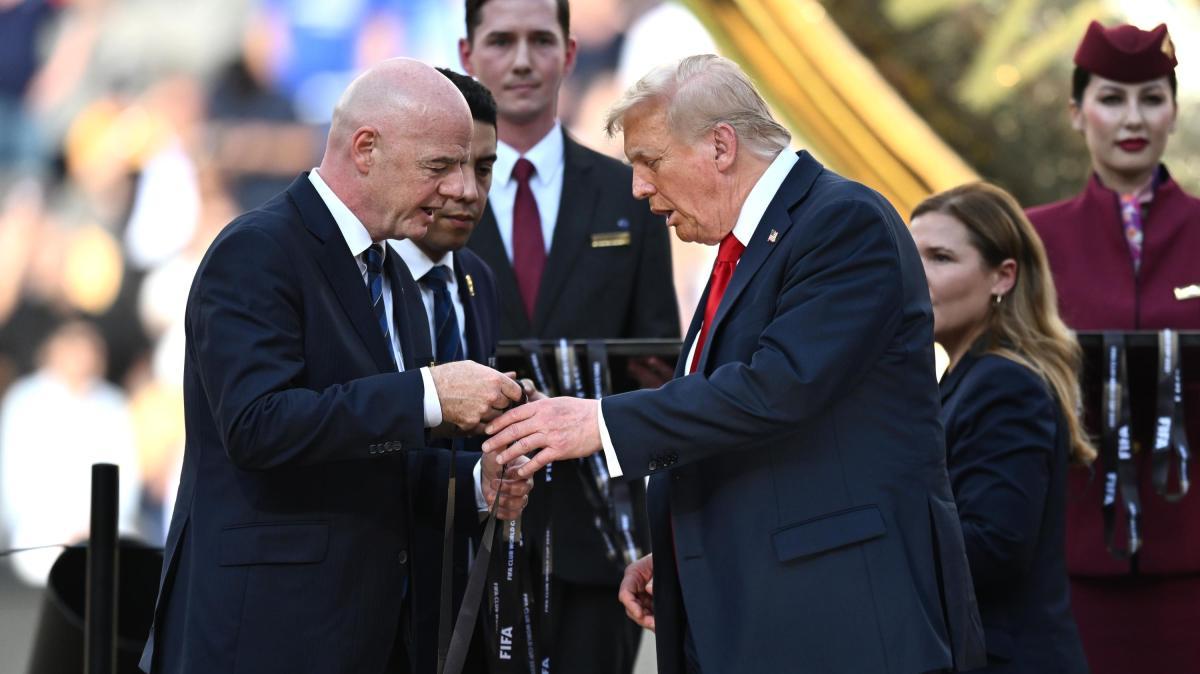
The decision regarding Balogun is particularly sensitive because it is unprecedented in the history of the World Cup, as several readings of the statement point out. Without a clear statement of the circumstances and evidence that would justify the use of article 27, the official argument boils down to the principle “we could do it, we did it”, a justification that hardly ends the public and legal debate surrounding the case.
The political-institutional context surrounding the organization headed by Gianni Infantino also does not help to dispel doubts. The FIFA president's relations with the Arab world – with Dubai and Saudi Arabia often at the center of scrutiny – and his history of closeness to figures such as Donald Trump have, over time, been the target of criticism. The Balogun dossier thus emerges in an environment of heightened sensitivity regarding the independence and coherence of disciplinary decisions.
With the 2026 World Cup on the horizon – a tournament that will be played in 16 stadiums in the United States, Mexico and Canada, with 48 teams and 104 games –, each FIFA regulatory act takes on an added dimension. The line between flexible interpretation of regulations and the creation of problematic precedents is, by nature, tenuous. Without disclosing the concrete facts that supported the pardon, FIFA risks transforming an attempt at clarification into a “patch worse than the hole”, prolonging the controversy instead of resolving it.
So far, it remains to be explained what specific circumstances led to the annulment of the sanction and what objective criteria supported the exceptional intervention. As long as this information gap persists, the Balogun case will continue to be a test of FIFA's disciplinary credibility on the eve of the biggest World Cup ever.
What happens next
With FIFA facing criticism over its decision, there is likely to be increased pressure on the organization to provide more information about the disciplinary process. Balogun's situation could influence his selection for the 2026 World Cup, depending on how FIFA manages the controversy. The player's future on the international stage could be shaped by this decision, especially if the lack of clarity continues to be a central theme.
Frequently asked questions
What happened to Folarin Balogun?
FIFA decided to forgive Folarin Balogun's suspension, but did not detail the circumstances that led to this decision.
Who confirmed FIFA's decision on Balogun?
The decision was confirmed by a statement from FIFA, attributed to the chairperson of the Disciplinary Committee, Mohammad Al-Kamali.
Why has FIFA made this decision on Balogun now?
FIFA justified the decision based on article 27 of its Disciplinary Code, which grants broad discretion to the judging body.
What changes does FIFA's decision bring to Balogun's case?
The decision is unprecedented
in the history of the World Cup and raises questions about the transparency and consistency of FIFA's disciplinary process.
What did FIFA say about reviewing red cards?
FIFA mentioned that it is 'normal' to review red cards in major European championships, but the comparison is not linear with other contexts, such as Italy.