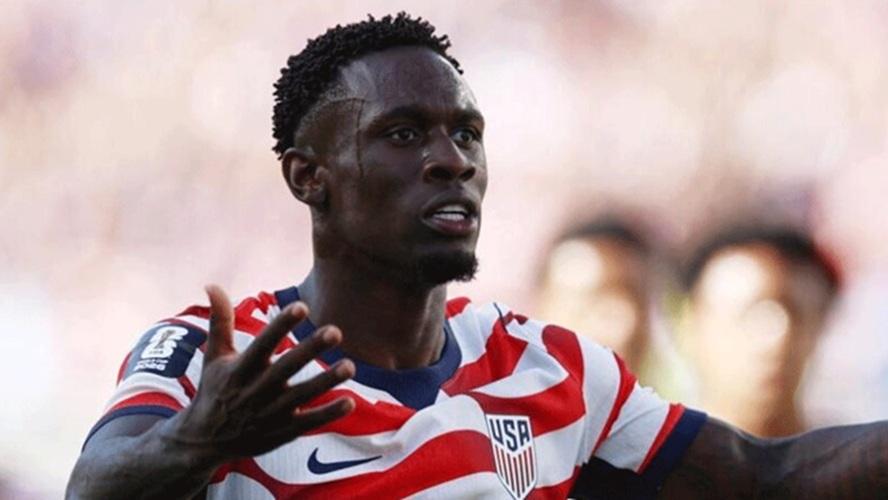
Balogun admits that it was difficult to maintain focus after the reversal
According to Soccernews.
Context
Folarin Balogun, striker for the United States national team, became a central figure in the 2026 World Cup controversy after his suspension was reversed. His presence in the game against Belgium, despite criticism, highlights the pressure that players face in major competitions. Balogun's ability to maintain focus in adverse situations will be crucial to the US team's future in the tournament.
Why this matters
Folarin Balogun's situation at the 2026 World Cup highlights the complexities and pressures surrounding the competition, especially when controversial decisions are made. The reversal of his red card suspension not only affected his concentration, but also raised questions about the integrity of the tournament and political influence in football. With the 2026 World Cup being held in three countries, including the United States, the attention on the performance of the North American team is even greater.
Main conclusions
- Balogun admits that it was difficult to maintain focus after the reversal.
- Folarin Balogun confessed to difficulties in maintaining concentration after the reversal of his suspension for a red card at the 2026 World Cup, an episode shrouded in controversy and alleged political pressure.
- It was difficult for USA star Folarin Balogun to focus following reversal of red card suspension (Video).
Folarin Balogun admitted that he experienced particularly turbulent days at the 2026 World Cup, after FIFA reversed the automatic suspension that resulted from his expulsion against Bosnia-Herzegovina. The decision allowed the striker to play in the round of 16 against Belgium, but was met with strong controversy and criticism on several fronts.
The case took on a global dimension when it was reported that the reversal had taken place after alleged contact between the then president of the United States, Donald Trump, and the top officials of the body that governs world football. Gianni Infantino, president of FIFA, denied that a possible call was decisive, while Trump publicly boasted about the outcome. On the field, however, Balogun's presence did not prevent a heavy defeat for the United States against Belgium, a result that led some North American fans to consider that the entire episode took away dignity from their team's outcome.
The pressure of a World Cup is, in itself, a demanding mental test. Balogun acknowledged this by highlighting that it was “difficult” to maintain focus, given the “a lot of external noise” created by FIFA’s decision. The forward knew that the reversal of the suspension would generate “a lot of controversy”, he admitted, in a confession that reflects the impact of the case on the team's daily life. In a tournament that, in 2026, will bring together 48 teams and be played in 16 stadiums across the United States, Mexico and Canada, every extra-sporting detail can amplify itself and impact collective performance.

From a sporting point of view, the elimination in the round of 16 marked an early stop for the USA, who had seen their main offensive reference reinstated after the red card. The narrative, however, went far beyond the pitch: the reversal of the suspension became one of the most discussed episodes of this edition of the World Cup, with debates about competitive integrity, the independence of disciplinary bodies and external influence on game decisions.
For Balogun, the challenge was to manage the media storm and present himself ready to compete in a knockout game. Even though the final result was not what the North Americans wanted, the case will go down as one of the most controversial moments of the tournament. The way FIFA communicated the decision, Infantino's denial and Trump's self-proclamation of merit fueled a plot that crossed borders and placed the United States team in the spotlight — for the least desired reasons.
With the 2026 World Cup moving forward and the knockout phase gaining intensity, the Balogun episode will serve as a reference for future discussions on disciplinary procedures in major competitions, remembering that, on a stage of this size, managing external noise can be as decisive as a goal in key moments.
What happens next
After the United States' defeat to Belgium, the team will have to recover and focus on the next stages of the tournament. The pressure on Balogun and his teammates will increase as the decisive games approach. With the 2026 World Cup being a showcase for emerging talent, Balogun will have the opportunity to showcase his ability to overcome adversity, both on and off the field.
Frequently asked questions
What happened to Folarin Balogun at the 2026 World Cup?
Folarin Balogun had his automatic suspension reversed by FIFA after being sent off in a game against Bosnia-Herzegovina, allowing him to play in the round of 16 against Belgium.
Who confirmed the reversal of Balogun's suspension?
The reversal of the suspension was confirmed by FIFA, although FIFA President Gianni Infantino denied that any contact from the then President of the United States, Donald Trump, influenced the decision.
Why did the reversal of Balogun's suspension generate controversy?
The reversal sparked controversy due to allegations that President Donald Trump had
approved by FIFA, which raised questions about the integrity of the decision.
What were the consequences of Balogun's presence in the game against Belgium?
Although Balogun played, the United States team suffered a heavy defeat against Belgium, leading to criticism about the dignity of the team's outcome.
How did Balogun feel about external pressure during the World Cup?
Balogun admitted it was difficult to stay focused due to 'a lot of outside noise' generated by the controversy surrounding his suspension.