
World Cup 2026: England faces the heat in the open air of Miami —
According to Bbc.
Context
England and Norway have different playing styles, and how each team adapts to the Miami heat could be a determining factor. While England have been protected from harsh conditions, Norway have faced similar challenges, which could give them a psychological and physical advantage in this decisive duel.
Why this matters
The clash between England and Norway at the 2026 World Cup is crucial, not only for the place in the semi-finals, but also for testing the teams' physical resistance under extreme conditions. England, who have so far played in controlled environments, face an unprecedented challenge in Miami, where heat and humidity can impact players' performance. The ability to adapt to these conditions can be decisive for success in the competition.
Main conclusions
- World Cup 2026: England faces the heat in the open air of Miami —.
- England and Norway face off in Miami under an extreme heat warning, in a quarter-final of the 2026 World Cup that could test the physical limits of both teams.
- England feature in the latest World Cup 2026 developments.
England enters unknown territory at the 2026 World Cup when they face Norway, this Saturday, in Miami, in a quarter-final marked by extreme heat and high humidity. After a route that has so far been protected from the harshest climate in North America, the English will have to deal with conditions that the global players' union itself considers potentially dangerous for playing the game. Forecasts from the North American National Weather Service point to air temperatures of around 33 ºC and a thermal sensation of around 41 ºC, under a scenario classified as a “threat of dangerous heat”. There is a risk of thunderstorms near the start of the meeting, the possibility of showers and, outside these periods, open weather.
Until now, England has largely been 'shielded' from the heat: they played in indoor venues in Dallas and Atlanta, air-conditioned to around 21 ºC, and the outdoor matches - Boston, New Jersey and Mexico City - took place in cooler and more humid environments. The hottest game was against Panama (25 ºC, cloudy skies). At altitude, in the Mexican capital, the temperature was around 18 ºC with rain — a total contrast to the challenge that awaits the team in Miami.
Norway, for its part, played almost all of its games outdoors. The exception was the triumph in the round of 16 against Ivory Coast, in Dallas, in an air-conditioned stadium. The debut against Iraq took place with clear skies and 25 ºC, while the duels with Senegal and France had rain and clouds (rotating options against the Gauls). In the 2-1 victory over Brazil, in New Jersey, the conditions were oppressive: 31 ºC in the shade and humidity making the thermal sensation soar.
In Miami, the WBGT (Wet Bulb Globe Temperature) index, a reference used by organizations such as FIFA to consider temperature, humidity and solar radiation, is estimated at between 28 and 30 ºC at kick-off time. FIFPRO guidelines recommend postponing or rescheduling matches when the WBGT exceeds 28°C. Still, there is no indication that the meeting will not take place.
Logistical preparation can be an English asset. The team spent its first days in the United States in Florida, with friendly matches against New Zealand (Tampa) and Costa Rica (Orlando), before settling into the tournament base in Kansas, where daily highs have fluctuated between 32 and 34 ºC. Performance experts validate acclimatization as a key factor in protecting health and performance. Norway is based in Greensboro, North Carolina, with temperatures similar to the English headquarters, and has played two previous friendlies against Sweden and Morocco in milder climates (Oslo and New Jersey, respectively).
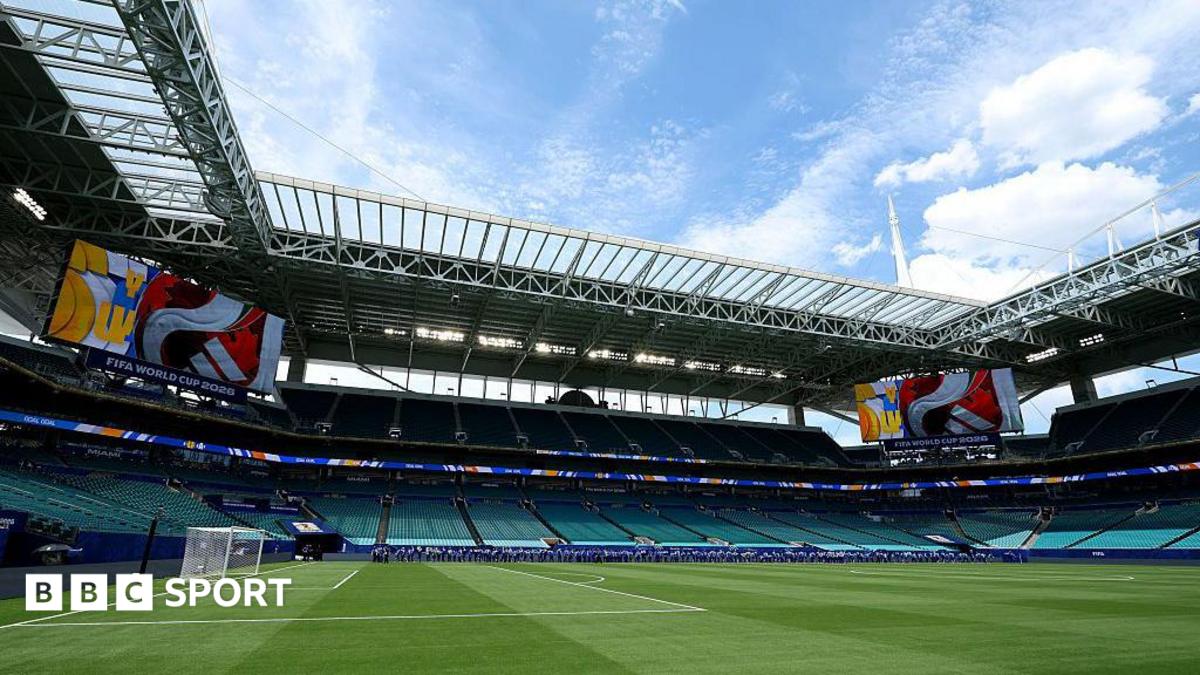
The Hard Rock Stadium, with its perimeter roof, resembles a European venue and can 'block' the breeze on the pitch, creating a kind of humidity trap. In very humid environments, the evaporation of sweat — the body's most effective cooling mechanism — is compromised. To mitigate risks, FIFA provides air-conditioned benches, water and electrolyte drinks, ice, cold towels, fans, misting and shaded areas. Thermal vests with ice packs before kickoff and towels soaked in ice water during hydration breaks and at halftime are additional measures frequently used.
Fans are also under warning. In the tournament's first three games at the venue, the Miami-Dade Fire Department reported 38 heat-related incidents, five of which required hospital transport. At the city's Fan Fest, there were 79 heat-related illness calls in a single day (June 23). Authorities recommend using shuttles with cooling points, instead of long walks, and experts reinforce the basics: seek shade, stay hydrated, bring a reusable bottle and wear a wide-brimmed hat.
The precedents in Miami leave no doubt: the two hottest games of the group stage were played here. In Uruguay–Saudi Arabia, the WBGT reached around 32.9 ºC, surpassed days later by 33 ºC in Uruguay–Cape Verde. In New Jersey, in a round of 16 match with 32.22 ºC, the French players even resorted to using lawn sprinklers to cool off. The peak of the tournament took place in Philadelphia, in the Paraguay–France round of 16 match, played at 37 ºC and with a sensation close to 44 ºC, at the height of the heat wave in the eastern USA. Remember the historic 1994 Ireland–Mexico, in Orlando, played at 43.33 ºC.
Whoever wins in Miami will have to quickly adjust their body again: Wednesday's semi-final, against Argentina or Switzerland, will again be in a controlled environment, at Atlanta's indoor stadium. Until then, the heat and humidity of Miami promise a test that is as tactical as it is physiological for England and Norway.
What happens next
As the game approaches, England will have to find ways to deal with the intense heat and high humidity, which could affect their performance. Norway, with more experience in outdoor games, may have a slight advantage. The result of this quarter-final could influence expectations for the next phase of the 2026 World Cup, where physical preparation will be fundamental.
Frequently asked questions
What happened at the 2026 World Cup between England and Norway?
England faces Norway in Miami, in a quarter-final marked by extreme heat and high humidity.
Who confirmed the weather conditions for the game?
Forecasts from the North American National Weather Service point to an air temperature of around 33 ºC and a wind chill of around 41 ºC.
Why is England now facing such severe weather conditions?
Until now, England have played indoors and in cooler environments, but now they will have to deal with the extreme heat in Miami.
What are the changes to the playing conditions for England?
England game
u in air-conditioned and cooler environments so far, but in Miami you will face heat and humidity that can be dangerous for playing the game.
Has Norway had similar experiences in previous games?
Yes, Norway played almost all of their games outdoors, with the exception of one game in Dallas, where they played in an air-conditioned stadium.