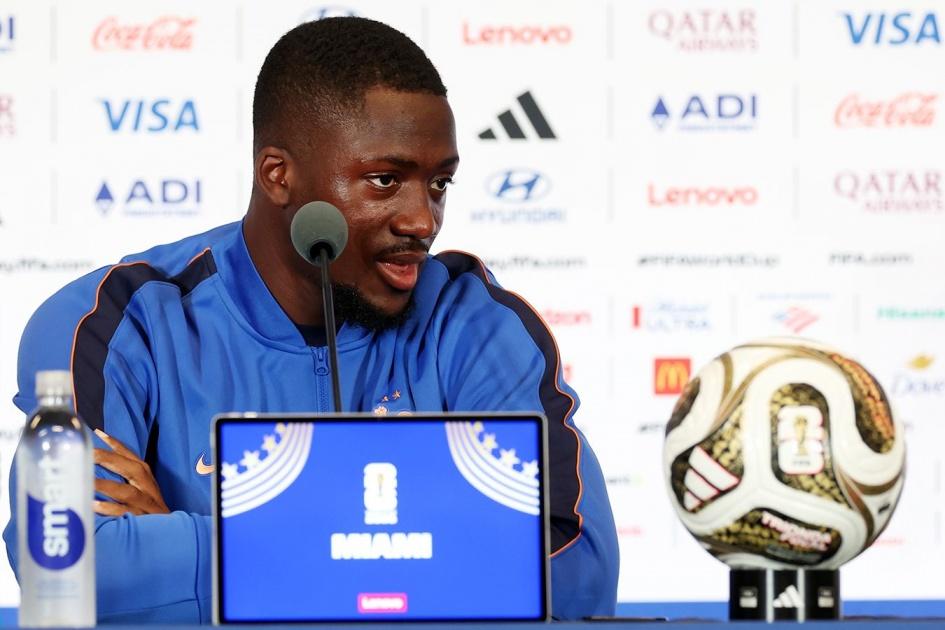
Konaté agrees with Tuchel about the third place game in the World Cup
According to Championat.
Why this matters
Iбраима Конате's statement about the third-place game at the 2026 World Cup reflects the ambition and pride that players feel when representing their nation. Despite not being the main objective, the match could have an important meaning for the honor and history of football, especially for teams like France, who have a rich tradition in the tournament.
Main conclusions
- Konaté agrees with Tuchel about the third place game in the World Cup.
- Ibrahima Konaté agrees with Thomas Tuchel: third place was not the goal for the teams at the 2026 World Cup, but the French defender remembers the obligation to honor the shirt and the anthem.
- Ибраима Конате согласился со словами Тухеля о нежелании играть в матче за бронзу ЧМ - Чемпионат.
Ibrahima Konaté, defender of the France team, endorsed the recent statements by Thomas Tuchel, England coach, about the teams' lack of appetite to compete in the third place game at the 2026 World Cup. The central defender acknowledged that the match for bronze was not part of the objective set by the French, who were clearly aiming for the final, but highlighted that, even so, there is a commitment to fulfill with the shirt and the country they represent.
"That wasn't our purpose. How do we come together and motivate ourselves after failing in the final?" — asked Konaté, assuming that the task is anything but simple. The player mentioned having read Tuchel's words in the press — “no one wants to play in this match” — and agreed with the diagnosis, remembering that, given the ultimate ambition of reaching the decisive game, the consolation of third place is always small. Even so, he reinforced that many Bleus members would accept to play the match with pride, because wearing the jersey, wearing the national colors and singing the Marseillaise continue to be a dream and an honor that demand respect.
The debate surrounding the third and fourth place award game is old and gains new momentum whenever great teams fall in the semi-finals. For many players and coaches, it is a difficult emotional duel, taking place right after the frustration of missing the final. For others, it maintains competitive and historical value: it closes the campaign with a possible victory, offers minutes to less used elements and guarantees a place on the tournament podium.

At the 2026 World Cup, which will be played in the United States, Mexico and Canada and will feature an extended format, the match for third place remains on FIFA's official calendar. The discussion raised by Tuchel - now in charge of England - and Konaté's agreement bring to the fore the human and psychological dimension of this meeting: the management of emotions after a lost semi-final, the need to reframe objectives in a few days and the responsibility of representing the nation regardless of the context.
On the French side, Konaté made it clear that professionalism must prevail. Even admitting the difficulty in finding immediate motivation, the Liverpool defender emphasized that the symbol on his chest speaks louder and that there is an obligation to compete seriously. The message, which coincides with that of many internationals in similar scenarios, reminds us that the shirt and the anthem continue to be drivers of commitment, especially on a stage like the World Cup.
Thus, between the disappointment of having missed the final and the duty to close the World Cup with dignity, Konaté's opinion sums up the feeling of a large part of the dressing room: no one enters the competition thinking about third place, but when the ball rolls, the honor of the team demands dedication and respect for the competition and the fans.
What happens next
As the 2026 World Cup approaches, the teams will have to deal with the pressure of competing at a high level. The way players like Konaté and Tuchel approach the third-place game could influence teams' mentalities, especially if they face opponents like England in the latter stages of the tournament. The expectation is that, regardless of the result, the honor of representing the country will prevail.
Frequently asked questions
Who is Ibrahima Konaté?
Ibrahima Konaté is a defender for the France national team.
What did Thomas Tuchel say about the third place game?
Thomas Tuchel mentioned that 'nobody wants to play that match', referring to the teams' lack of appetite to play in the third place game.
What is Konaté's opinion on the third place game at Worlds 2026?
Konaté agrees with Tuchel and recognizes that the match for bronze is not part of the French's objectives, but there is still a commitment to fulfill.
Why is the third place game considered emotionally difficult?
It is considered difficult because it happens right after the frustration of f
reach the final, which makes the motivation to play challenging.
How important is the third place game to some players?
For some, the third-place game retains competitive and historical value, as it can close the campaign with a victory and guarantee a place on the podium.