
France–England analysis: 4-6 in the 3rd place game in Miami and one
According to Vi.
Context
England's victory under the direction of Thomas Tuchel, who made a significant rotation in the team, shows the adaptability and depth of the squad. The performance of players like Marcus Rashford and Eberechi Eze could influence the coach's choices for the next qualifying phase for the 2026 World Cup.
Why this matters
England's victory over France in the 2026 World Cup 3rd place game not only eases the pressure after their disappointment in the semi-finals, but also highlights the depth of the English squad. The performance of lesser-used players such as Eberechi Eze and Bukayo Saka suggests that the team has viable alternatives for the future, which is crucial for preparation for the 2026 World Cup.
Main conclusions
- France–England analysis: 4-6 in the 3rd place game in Miami and one.
- England beats France 6-4 in the 3rd place game of the 2026 World Cup, in Miami.
- Analyse Frankrijk Engeland troostfinale.
The match that no team wants to play ended up offering one of the strangest and most entertaining spectacles of this 2026 World Cup. At the Hard Rock Stadium, in Miami, England beat France 6-4 in the 3rd place game, just three days after one of the biggest disappointments in their recent history in the final stages. The result, in addition to the convincing victory, left a clear message: Thomas Tuchel's team seems to breathe better with a freer and more vertical approach – and it was precisely several of the players that the coach had left on the bench against Argentina who responded in a big way.
There was rotation on both sides, as would be expected in a match without the biggest trophy up for grabs. On the French side, Didier Deschamps – in what was his last game as coach – changed seven positions and even saved one of his figures, Ousmane Dembélé, who started on the bench. However, the costume change did not bring intensity or coordination to the Blues. The team appeared loose in the first phase of construction, but disjointed in closing, allowing the English initiative to turn into clear scoring opportunities too many times.
England also made a deep rotation: Tuchel also made seven changes and spared practically all the leaders who had suffered a lot of wear throughout the tournament – Harry Kane, Jude Bellingham, Anthony Gordon, Elliot Anderson and Jordan Pickford were left out of the eleven. More surprising was the start of Eberechi Eze, Bukayo Saka and Marcus Rashford, three agitators who had been kept on the bench during much of the debacle against Argentina. In Miami, the response was immediate: width, acceleration on the wings and greater freedom between the lines gave a new face to the English attack.
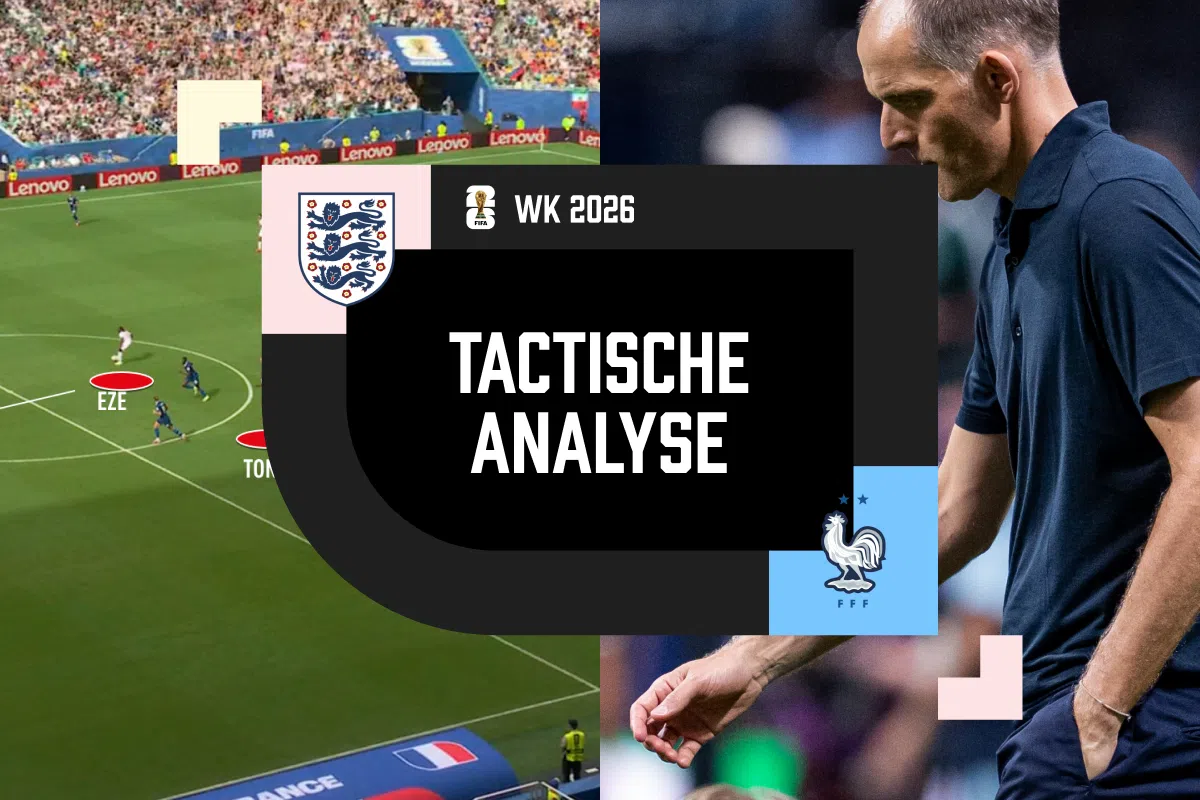
France, apathetic and with little competitive spark, suffered from the high pressure and the opponent's quick transitions. The game opened early, with goals in succession exposing spaces and late decisions in the Gauls' defensive organization. The final 6-4 sounds like a pre-season festival, but it carries serious readings: with greater offensive boldness and pieces designed to attack depth and imbalances, England were more dangerous, more direct and, above all, more comfortable.
For Tuchel, there is a painful lesson. Not only due to the observation that a less rigid England yields more, but also due to the protagonism of the names that had been secondary. The management of figures and the balance between control and creativity thus emerge as central themes for the next cycle. The victory, even “just” in the consolation final, works as a tonic for the immediate future and restores confidence to a player base that demonstrated that it has the arguments for big games.
On the French side, Deschamps' farewell ends without the desired shine. Seven changes, a wide rotation approach and a night of low intensity left France off the podium and with a lot of reflection for the next coach: to rebuild a group that, despite its individual quality, showed weaknesses when it lacked the usual competitive rigor. In Miami, England closed the World Cup with an exuberant rout and a clear message for their own bench: there are solutions that call for more minutes – and an idea that calls for more freedom.
What happens next
With the conclusion of the 2026 World Cup, both England and France will have to evaluate their strategies and squads for the future. England, now with a renewed form, will be able to use this victory as a springboard for next season, while France, under new leadership, will look to re-establish their strength in international football.
Frequently asked questions
What was the result of the game between England and France?
England beat France 6-4 in the 3rd place game.
How does this result impact the 2026 World Cup table?
The result does not change the overall classification, as it was only the 3rd place game.
Who were the players who did not play for England in this game?
Harry Kane, Jude Bellingham, Anthony Gordon, Elliot Anderson and Jordan Pickford did not play.
When is England's next game at the 2026 World Cup?
England's next game at the 2026 World Cup has not yet been announced.
Who was the France coach in this game?
Didier Deschamps was the France coach, and this was his last game as coach.