
World Cup 2026: the Premier League clubs facing the 'hangover'
According to Bbc.
Context
Cristian Romero, who played a key role in Argentina's defense during the 2026 World Cup, is expected to face a shorter adaptation period before the start of the new Premier League season. His ability to quickly reintegrate into training and team dynamics will be crucial to Tottenham's success in the league.
Why this matters
The proximity between the 2026 World Cup and the start of the Premier League represents a significant challenge for English clubs, especially Tottenham, who have crucial players such as Cristian Romero. The lack of time for the recovery and integration of international players can affect the team's initial performance in the league, impacting the fight for positions in the table and preparation for the season.
Main conclusions
- World Cup 2026: the Premier League clubs facing the 'hangover'.
- The short window between the 2026 World Cup and the start of the Premier League leaves several English clubs with conditioned pre-seasons, many internationals in physical management and some injury cases.
- World Cup 2026: The Premier League clubs fighting a World Cup hangover - BBC Sport.
The 2026/27 Premier League starts on August 21st — just 33 days after the 2026 World Cup final. For many clubs, this break is barely enough to meet the minimum three weeks of rest imposed by regulations
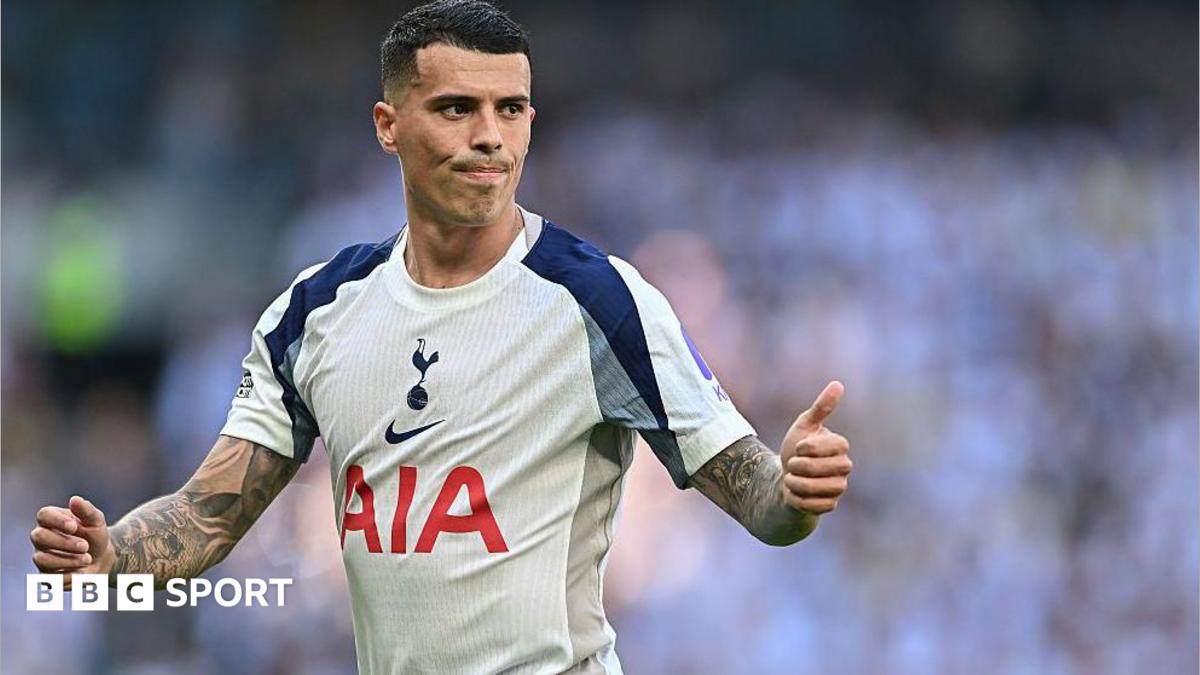
Tottenham is one of the teams with the most affected preparation. On the final weekend of the tournament there were still four players in contention: Cristian Romero and reinforcement Marcos Senesi reached the final with Argentina, Pedro Porro helped Spain lift the trophy and Djed Spence remained with the English team until the third place match, played on July 18th. Following the minimum three weeks off, Romero, Senesi and Porro would only return on August 9th, while Spence would have an earlier date of August 8th. Result: around two weeks to gain rhythm and assimilate processes before Spurs' kick-off at Brentford on August 22nd. For coaches, the dilemma goes beyond absence: those who return late lose tactical load, conditioning and game minutes, forcing them to balance recovery with competitive preparation.
Manchester City and Arsenal equally bear much of the weight of the World Cup. At City, Rodri was a key player in Spain's world title and played 726 minutes; Marc Guehi and Elliot Anderson were part of the England team until last weekend, with Nico O’Reilly also used in the campaign that reached the semi-finals. Erling Haaland (Norway) and Jeremy Doku (Belgium) reached the quarterfinals. On the Arsenal side, Declan Rice and Bukayo Saka remained until the third-place match, while Martin Zubimendi and Mikel Merino reached the final with Spain. William Saliba helped France reach the podium game, but was injured and did not play again. Noni Madueke was part of England's journey to the final weekend, not playing beyond the quarter-finals, and Martin Odegaard captained Norway to the quarter-finals.
The concerns are already visible. At City, Rodri underwent a minor back intervention and is expected to miss a short period at the start of the season. At Arsenal, Saliba avoided surgery but will be out for an extended period due to a lower back problem. Even though none of the situations arise solely from the World Cup, they highlight the extreme demands of an increasingly tighter calendar with fewer recovery windows.
In terms of workload, the maximum World Cup record among Premier League players belonged to Emiliano Martínez, Aston Villa goalkeeper, with 810 minutes on the field in Argentina's journey to the final. Alexis Mac Allister (Liverpool) played 749 minutes and Rodri 726. Several athletes played, in practice, the equivalent of eight full games in the tournament. Although goalkeepers have different physical demands, the numbers illustrate the depth of the Premier League's involvement in the competition.
With an end on July 19th, the finalists — such as Rodri, Porro, Zubimendi, Mac Allister, Enzo Fernández, Emiliano Martínez and Lisandro Martínez — can only return, at least, on August 9th. Whoever played for third place, on July 18th, has the earliest date of August 8th. For many clubs, this means around 12 days to reinstate starters before the official start.
And the horizon doesn't alleviate it. For many stars, this was the third consecutive summer of major competitions — after Euro 2024 and the Copa América, followed by last year's extended Club World Cup and now the World Cup. Rodri even warned in 2024 that footballers were “close” to a strike due to too many games, and Mikel Arteta (Arsenal) and Enzo Maresca (Chelsea) also expressed concern about the increasing number of fixtures. During the World Cup, the list of absences reinforced the warnings: Amadou Onana (Aston Villa) suffered a serious knee injury for Belgium; Manuel Ugarte (Manchester United/Uruguay) saw the tournament end early; and Reece James (Chelsea) had minutes managed after a muscle problem.
For Tottenham, Arsenal, Manchester City, Chelsea and company, the challenge is immediate: managing the recovery without compromising the start. The clock is ticking for the 1st round — but, for many internationals, the priority remains recovering and arriving ready for the opening whistle.
What happens next
With the Premier League starting on August 21, clubs will have to find ways to balance the recovery of players who participated in the 2026 World Cup with the need to prepare the team for the challenges ahead. Tottenham in particular will have to accelerate the reintegration of Cristian Romero and other internationals to ensure they are ready for the first game of the season against Brentford.
Frequently asked questions
What happened to Premier League clubs after the 2026 World Cup?
Premier League clubs face challenges due to the short gap between the 2026 World Cup final and the start of the 2026/27 season, which begins on August 21.
Who confirmed that the players will have little rest after the World Cup?
The impact of the World Cup on clubs' preparations was discussed in the context of the article, which mentions FIFA's rules on player rest.
Why is now a critical time for Premier League clubs?
Now is a critical time because the Premier League season starts just 33 days after the World Cup final, limiting players' recovery and preparation time.
What changes will clubs have to make in their preparation?
Clubs will have to balance the recovery of players who participated in the World Cup with tactical and competitive preparation for the new season.
Which Premier League players were involved in the 2026 World Cup?
Players such as Cristian Romero, Rodri, Declan Rice, and Bukayo Saka, among others, were involved in the 2026 World Cup, impacting their clubs' preparations.
Related Items
- Arsenal lift the Premier League again 22 years later, at Selhurst Park
- Premier League
- Van Dijk thanks Slot after leaving Liverpool: 'We will never forget'
- Thomas Frank will not take on a new role this season