
Legend and destiny: Baresi and the number 6, a circle that closes
According to Tuttomercatoweb.
Context
Franco Baresi, a Milan and Italy legend, is widely recognized as one of the best defenders in football history. His career at Milan, where he spent his entire professional life, and his fundamental role in the Italian National Team, where he won important titles, solidified his position as an icon of world football and a symbol of Serie A.
Why this matters
The death of Franco Baresi marks the end of an era in football, not just for Milan, but for the entire history of Italian football. His legacy as a revolutionary defender and inspirational leader shaped the Italian national team's style of play and left an indelible mark on Serie A. The number 6, which he so well personified, transcends its role on the pitch, symbolizing a playing philosophy that values intelligence and elegance.
Main conclusions
- Legend and destination: Baresi and the number 6, a circle that dates from.
- Franco Baresi, myth of Milan and the Italian national team, dies at the age of
- Legend and destiny: Baresi and the number 6, an inevitably closed circle.
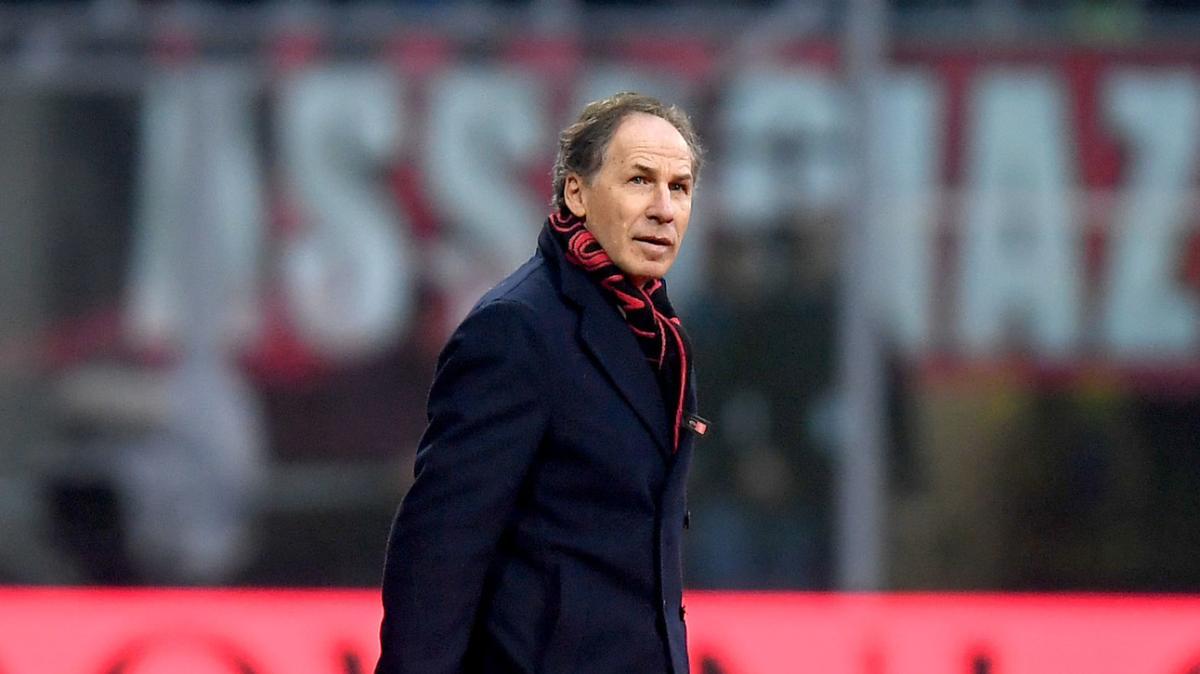
There are departures that seem written by destiny itself. Franco Baresi died at the age of 66, twice six, closing a circle with the number that was much more than a simple number: it became identity, philosophy and way of being on the field. At Milan and in the Italian National Team, the number 6 gained face, elegance and soul through his captain. The 6 symbolizes balance, order and protection. It is the number of those who command from behind, of those who do not seek the spotlight, but end up conquering it through silent leadership. It is the look that sees first, the anticipation that cancels out the danger, the security that infects the entire team. That's exactly what Baresi represented. With him, the role of the defender changed forever. He transformed marking into intelligence, shock into class, the defensive line into a work of collective choreography, turning offside into a lethal weapon. It wasn't just the man who prevented goals: he was the one who started the game, dictated rhythms and organized the team with disarming naturalness. But Baresi's number 6 tells, above all, a story of loyalty and belonging. He stayed at Milan when the crisis pushed the club into Serie B, he chose to share the pain before returning to glory, taking responsibility at all times. He became the heart of a legendary team, the captain who led them to triumphs that defined an era and defined a style of football. In the Italian team, the mark was equally profound: world champion in 1982, the epic of Pasadena in 1994 remains in the collective imagination, when, after having surgery on the meniscus, he did everything he could to be in the World Cup final. He raced against time, defied science, played like a giant; The penalty sent over the bar added bitterness to the page, but did not diminish its dimension — on the contrary, it helped to immortalize the legend. Baresi was grandeur and sobriety, rigor and elegance. He represented a football of values that today seem distant: leadership by example, tactical reading, courage in decisive moments. For Rossoneri fans, it is synonymous with absolute loyalty; for world football, a canon of the modern defender, a reference for generations that learned to see the central defender as the first builder and the last guarantor. Sixty-six years — twice as many as 6 — leave the memory of a figure who went beyond club boundaries. Milan icon and Azzurri emblem, Franco Baresi didn't just wear number 6: he made it eternal. His legacy lives on in every defensive line that rises in unison, in every exit from behind with discretion, in every captain who guides without noise. Certain jerseys aren't just numbers — they're principles. In the case of Baresi, 6 is now synonymous with immortality.
What happens next
With the loss of Baresi, Milan and the Italian football community are expected to pay tribute to his legacy. Tributes and celebrations of his life and career are likely, reflecting the importance he had at the club and the Italian national team. Furthermore, his influence can be felt in future generations of players who aspire to emulate his style and work ethic.
Frequently asked questions
What happened to Franco Baresi?
Franco Baresi died at the age of 66.
Who confirmed the death of Franco Baresi?
The death of Franco Baresi was confirmed by football sources.
Why is the number 6 significant for Franco Baresi?
The number 6 symbolizes balance, order and protection, and became Baresi's identity and philosophy at Milan and the Italy national team.
What changes did Baresi bring to the role of defender?
Baresi turned marking into intelligence and shock into class, changing the way you play defense.
What was Baresi's impact on the Italy national team?
Baresi was world champion in 1982 and is remembered for his determination to play in the 1994 World Cup final, despite an injury.