
Five dramatic days that shook Infantino and world football
According to Bbc.
Why this matters
The recent crisis at FIFA, caused by the decline in the private investment plan, raises questions about transparency and trust in world football leaders. UEFA, by declaring that it has lost confidence in Gianni Infantino, signals a deep discontent that could affect the governance of football, especially with the 2026 World Cup approaching. This episode recalls the turmoil of the European Super League, which also quickly collapsed due to resistance from fans and institutions.
Main conclusions
- Five dramatic days that shook Infantino and world football.
- The rollback of FIFA's private investment plan for competitions has triggered a harsh response from UEFA, which says it has lost confidence in Gianni Infantino.
- The five dramatic days that shook Infantino and world football.
The week ended with a seismic shock in the governance of world football. After five days of strong opposition, FIFA confirmed on Saturday the withdrawal of the controversial private investment plan in its competitions — and UEFA was adamant in declaring that it had lost confidence in Gianni Infantino's leadership. In an unusually harsh statement, the European entity criticized the lack of transparency and “secret schemes”, pointing out flaws in the face of the promises made in 2016, when the Swiss asked for votes under the commitment of openness and that “FIFA's money is the money of the associations”.
The sequence of events brought to mind the collapse of the European Super League in 2021, which was then undone in 72 hours due to fan revolt and institutional pressure. The plan now rejected by FIFA lasted a little longer, but the outcome was similar: widespread resistance and a feeling that there are lines that football cannot accept being crossed.
The question that echoed from the beginning was simple: why use private capital? FIFA is a non-profit organization, has reserves of more than 2 billion dollars and expects record revenues of around 15 billion related to this summer's World Cup. Furthermore, some federations did not need the additional 40 million dollars for development that would be made available to those who joined by September 19th. The absence of a robust public explanation — and, as is now known, of prior internal discussion — worsened the crisis.
According to several sources, vice presidents, special advisors and top executives were not informed in a timely manner about the preparation of the dossier, missing the opportunity to scrutinize the plan. UEFA's opposition was immediate and, once the retreat was complete, the response was sharp: FIFA's current leadership failed in its transparency commitments and does not deserve trust. In Asia, the president of the AFC and deputy of FIFA, Sheikh Salman bin Ebrahim Al Khalifa, reinforced the call for “timely, transparent and meaningful” processes in any proposal with a global impact. From Australia, the president of the federation, Anter Isaac, stressed that trust is built through the integrity of processes: principles such as good governance, independence, transparency, meaningful consultation and due process are not brakes on progress — they are its basis.
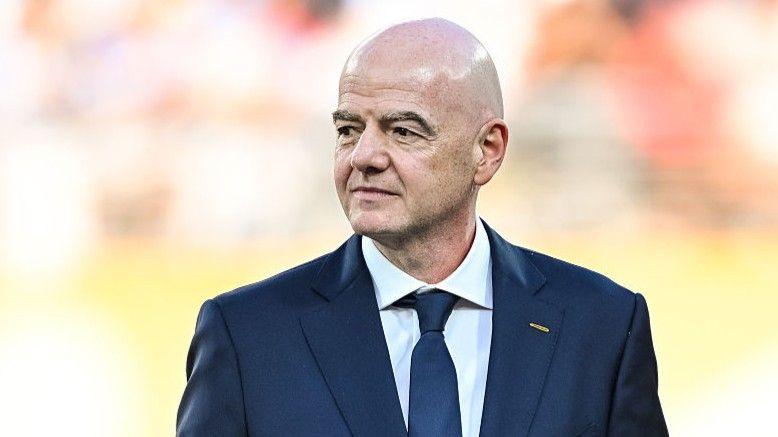
In an attempt to respond, FIFA claimed in the early hours of Friday that the “planned consultation process” had been hampered by “incorrect reporting” in the media. But the direction of the wind was already defined. The final blow came with the harsh stance of its operations director, Kevin Lamour, who called the dossier “one person's project” and stated that the administration felt “duped”. In the same internal text, Lamour wrote that, although he owes loyalty to his employer, he also owes it to certain values and colleagues: “Our mission is to serve football.” BBC Sport requested a reaction from FIFA.
On a political level, the episode exposed weaknesses. Infantino has cultivated a close relationship with US President Donald Trump, and both helped present the World Cup to Spain less than two weeks ago. Asked for the first time about the topic, Trump said he had not spoken to the FIFA leader about the plan. The New York Post, which advanced the withdrawal of the proposal, cited a source describing the case as a “brand nightmare” for Joshua Kushner — brother of Trump's son-in-law, Jared —, whose Thrive Eternal fund would lead the investing consortium.
With the retreat complete, the FIFA president now faces the task of rebuilding bridges in a context in which, according to various readings, support for his re-election in March may be decreasing. Even before UEFA's official communication, vice-president Laura McAllister admitted on BBC Radio 4 that “all confederations will be considering options”, highlighting the unity and consensus that defeated the proposal.
If the Superliga showed that fans could draw limits, this week proved that, within the football ecosystem itself, there are also insurmountable barriers. The crisis exposed, above all, the requirement for clear and shared processes in making decisions with a planetary impact — a lesson that FIFA will not be able to ignore when it thinks about the future of its competitions again.
What happens next
With FIFA facing a crisis of confidence, UEFA is likely to step up pressure on Gianni Infantino to re-evaluate his approach to football governance. The future of competitions and private investment in football may be re-examined, especially in light of promises of greater transparency. The situation could also influence the dialogue on the financing and structure of competitions as the 2026 World Cup approaches.
Frequently asked questions
What happened to FIFA's private investment plan?
FIFA confirmed the withdrawal of the controversial private investment plan in its competitions after five days of strong opposition.
Who confirmed the withdrawal of the investment plan?
The withdrawal of the private investment plan was confirmed by FIFA.
Why did FIFA decide to withdraw the investment plan now?
FIFA withdrew the plan due to widespread resistance and a lack of transparency, as well as harsh criticism from UEFA.
What changes have occurred in the relationship between UEFA and Gianni Infantino?
UEFA declared that it had lost confidence in Gianni Infantino's leadership, criticizing the lack of transparency and 'secret schemes'.
What was UEFA's reaction to FIFA's investment plan?
UEFA was immediately opposed to FIFA's investment plan, leading to a crisis that culminated in the withdrawal of the plan.