
CAF shows openness to Infantino’s project giving up quotas
According to Tuttomercatoweb.
Why this matters
CAF's openness to the FIFA project could have a significant impact on the future of football financing, especially in Africa. While other confederations, such as UEFA and CONCACAF, have expressed criticism, CAF's willingness to engage in dialogue could influence how revenue from the 2026 World Cup will be distributed and used for the development of football on the continent. This move could also shape the global discussion on private investors' participation in World Cup revenues.
Main conclusions
- CAF shows openness to Infantino's project giving up quotas.
- CAF was the first confederation not to immediately oppose FIFA's project to transfer shares of World Cup revenue to private investors.
- Infantino does not fail alone: the CAF is willing to work with its project.
The African Football Confederation (CAF) became the first major confederation not to oppose FIFA's new project, which includes the possible transfer of shares of future World Cup revenues to private investors. At a time when several voices in international football have condemned the initiative, CAF has taken a position of openness to dialogue, distinguishing itself from the most critical responses already made public by UEFA, AFC and CONCACAF.
According to information shared, FIFA, led by Gianni Infantino, presented the plan as “an opportunity, not an obligation”, highlighting that the goal is to generate new sources of financing to reinforce football development programs at a global level. In a statement, CAF confirmed that it had received the proposal and said that its Executive Committee will analyze it in detail next week, before moving on to broader deliberations.
At the same time, the body that governs African football invited all national federations on the continent to examine the project, identified as “FIFA Forward Enterprise”, and to actively participate in the consultation process launched by the body that governs world football. The confederation stressed that the priority remains unchanged: increasing the financial resources and instruments available for the growth of football in Africa and the rest of the world, therefore viewing the proposal as an opportunity to be evaluated in depth and not as something to reject out of hand.
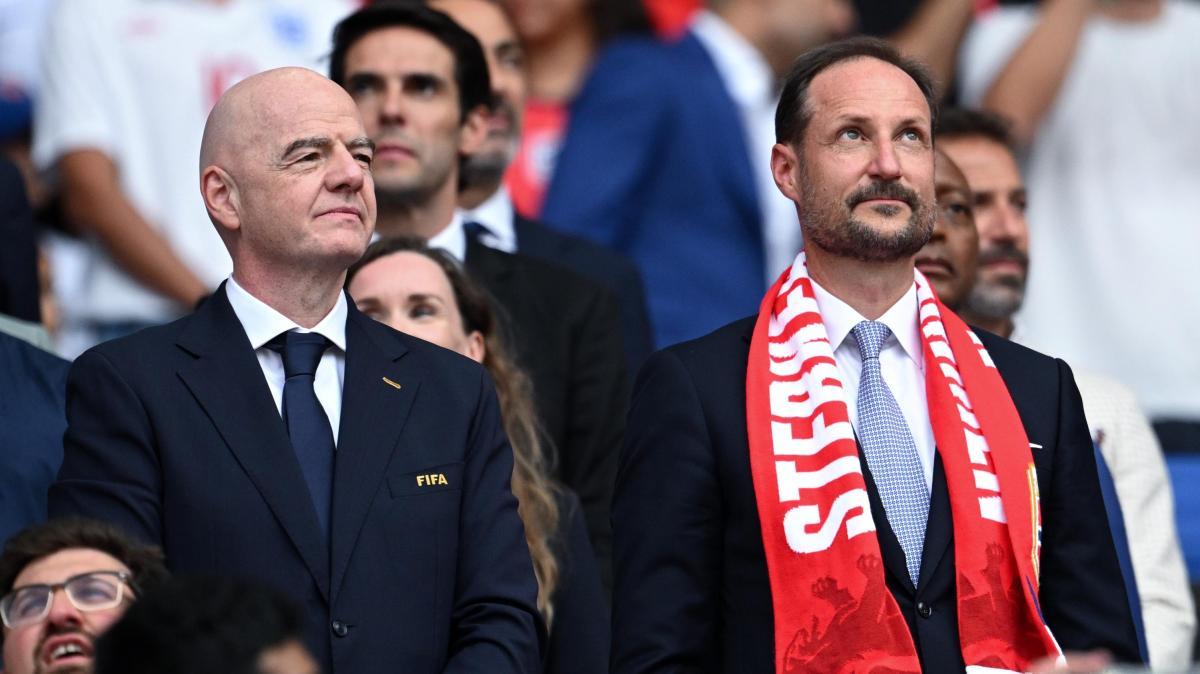
This stance represents, at the very least, the first sign of political receptivity to Infantino's plan among the confederations, even though it is in the preliminary analysis phase. Contrary to what has already been conveyed by UEFA, AFC and CONCACAF — which were openly critical of the idea —, CAF opens space for a technical and institutional debate that could influence the direction of the international discussion in the coming weeks.
The sporting and commercial context also helps frame the theme. The next World Cup, in 2026, will have an unprecedented dimension, with 48 teams and 104 games divided between the United States, Mexico and Canada. An event of this scale requires large-scale financial and logistical structures, so it is not surprising that FIFA is looking for additional models to attract investment. Still, the proposal that is now on the table will be examined by the competent bodies, with CAF signaling that it wants to listen to its federations and work closely with all interested parties before taking any definitive position.
For now, there are no public deadlines beyond the CAF Executive Committee meeting next week, nor additional details on possible formats for private investors to participate in World Cup revenues. What is certain is that the African opening gives new impetus to the debate — and could make a difference in the political alignment between confederations when FIFA moves to the next steps of its consultation process.
What happens next
The CAF Executive Committee will review FIFA's proposal next week, which could lead to wider deliberations on the implementation of the project. CAF also encouraged African federations to engage in the 'FIFA Forward Enterprise' consultation process, which could result in a unified or divergent position among the continent's federations. The outcome of these discussions could have significant repercussions on World Cup revenues and the way football is financed in Africa.
Frequently asked questions
What happened to CAF and the FIFA project?
CAF showed openness to the FIFA project that proposes to transfer shares of World Cup revenue to private investors, differentiating itself from other confederations that opposed it.
Who confirmed CAF's openness to the FIFA project?
Confirmation came from the Confederation of African Football (CAF) itself through a statement.
Why is CAF considering the project now?
CAF is considering the project as an opportunity to increase financial resources and instruments available for the growth of football in Africa and the rest of the world.
What changes is CAF proposing in relation to the project?
CAF invited all national federations on the continent to examine the project and actively participate in the consultation process launched by FIFA.
What is CAF's priority when evaluating the FIFA project?
CAF's priority remains unchanged: increasing financial resources and instruments available for the growth of football.